Smoke, stone and löyly: a short history of the Finnish sauna
From pits dug into hillsides to a UNESCO listing, how a room full of smoke became the heart of a nation — and how a country of 5.5 million came to have 3.3 million saunas.
By Halvarm Editorial · Published · 7 min read
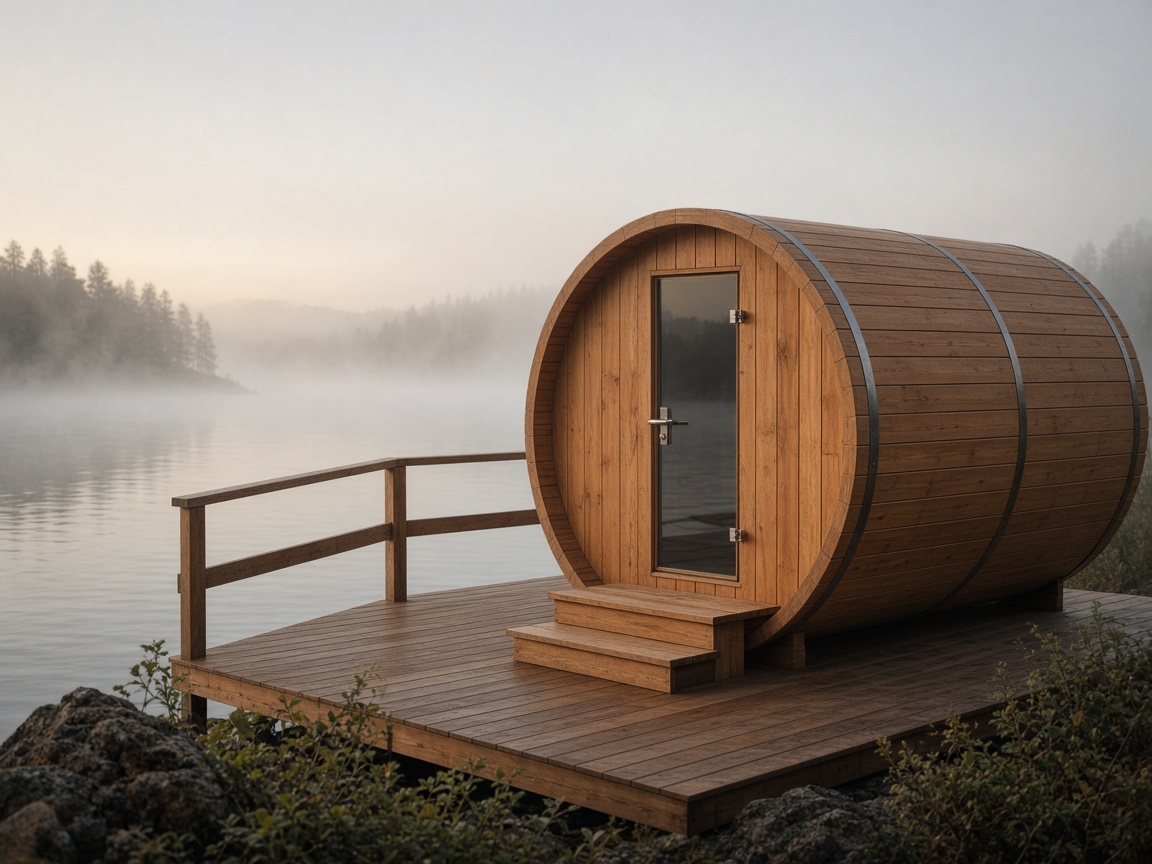
Imagine a winter night in the Finnish countryside, long before electricity. There is a small, dark room dug partly into a hillside. A fire has been burning in a heap of stones for hours. The smoke has finally been let out through a hatch; the embers have died. Someone ladles water onto the stones, and a wave of heat rolls across the benches.
The Finns have a word for that wave: löyly. UNESCO's description of Finnish sauna culture calls it "the spirit or steam released by casting water onto a stack of heated stones" — and places it at the very heart of the experience.
It's a fitting place to start, because the history of the sauna is really the history of people trying to make better löyly.
A word older than the room
Sauna is an ancient Finnish word, used for both the bath and the bathhouse, and it is the best-known Finnish loanword in many of the world's languages. Its deeper origins are debated. One hypothesis, proposed by linguist Petri Kallio, traces it to a Germanic word related to the English stack — a pile or heap — which would make the word a description of the earliest sauna stove: a pile of stones.
Whether or not that theory holds, it captures something true. Before the sauna was a building, it was a fire and a stack of rocks.
Pits, smoke and patience
The oldest known saunas in Finland were pits dug into a slope, used in winter partly as dwellings. A fireplace heated stones to a high temperature; water thrown onto them produced steam and a sharp sensation of added heat.
From those pits came the form many Finns still consider the purest: the savusauna, or smoke sauna. It has no chimney. The fire burns in the stove for hours and the smoke fills the room, curing the timber and leaving the walls black with soot. Only once the fire is out and the smoke has drifted away through a hatch is the sauna ready.
It's slow, and it demands craft. The Finnish Sauna Society's guidance on a good smoke sauna reads almost like a sommelier's notes: use dry, mixed firewood cut small; finish with alder or aspen, which contain no pitch; add a little pine or spruce for a "pleasantly bitter fragrance"; allow at least an hour for the embers to go out; and keep the temperature low and steady, around 60–80 °C, because a smoke sauna that's too hot is a ruined one.
The same guidance points out the risk hidden in all that romance: an unfinished burn produces carbon monoxide, which is why the embers must be fully out and removed before bathing. Tradition and safety have always gone together in the sauna.
There's also a quietly beautiful observation in that text. A chimneyless sauna, it says, is an ecological one: when it finally disappears — some 700 years after it was built — all that remains is a pile of rocks. The sauna ends where it began.
A sacred room
To call the sauna a bathroom misses the point. UNESCO notes that it has traditionally been considered a sacred space — a "church of nature" — where people cleanse their minds as well as their bodies and "embrace a sense of inner peace." Traditions are mostly handed down within families, with sauna clubs and universities helping to pass the knowledge on.
That is perhaps why the sauna survived every modernisation that came after the smoke sauna. Wood stoves with chimneys made it faster to heat. Electric heaters brought it into apartments. Infrared cabins brought a gentler, different kind of warmth. UNESCO's description lists electric, wood-heated, smoke and infrared saunas side by side — and notes there is "no hierarchy among them."
The doctors who formed a society
On 16 November 1937, a group of Finns founded an organisation called Suomalaisen saunan ystävät — "Friends of the Finnish sauna." Today it's known as the Finnish Sauna Society.
Its founders were nationalistic physicians. Their goal, in the Society's own words, was to study the sauna and its effects, to make it more widely known abroad, and to improve its quality while honouring tradition. Half a century before the Kuopio researchers began collecting data, Finnish doctors were already convinced the sauna deserved scientific attention.
After its first decade the Society acquired its own sauna by Humallahti Bay in Helsinki, which stayed in use until 1968. But the site was small and the swimming water wasn't ideal — and in Finland, the plunge after the heat matters almost as much as the heat itself. So the Society built a new centre at Vaskiniemi, on Helsinki's Lauttasaari island. It was completed in 1952, the year Helsinki hosted the Olympic Games, with four chimneyless smoke saunas, two wood-heated saunas with chimneys and one electric sauna. The Society today has roughly 4,400 members.
Decline in the cities, and a revival
Finnish cities once had traditional public saunas. But UNESCO's account notes that traditional public saunas in the cities almost disappeared after the 1950s, as private saunas moved into homes and apartment buildings.
Then the tide turned. In recent years, new public saunas have been built thanks to private initiatives — a renewed appetite for sauna as something shared, social and outdoors, often by the water.
Heritage of humanity
The modern chapter of the story is bureaucratic, but it matters. In November 2017, sauna bathing was added to Finland's National Inventory of Living Heritage. In 2018, the Ministry of Education and Culture selected it as the country's first nomination for UNESCO's list. And on 17 December 2020, UNESCO inscribed Sauna culture in Finland on its Representative List of the Intangible Cultural Heritage of Humanity — the first Finnish tradition ever added.
The numbers in that listing explain why: 3.3 million saunas in a country of 5.5 million people. The sauna, as UNESCO puts it, is "readily accessible to all."
What the history teaches a new sauna owner
Look back over those centuries and a few principles keep reappearing. Good löyly needs hot, heavy stones and a little water. Good wood and good airflow matter. The cooling-off — in a lake, the snow or a cold plunge — is part of the ritual, not an afterthought. And the best sauna is, as the Finnish Sauna Society cheerfully admits, the one you'll actually use.
If you're curious about what modern science has to say about that ritual, read what the Finnish Kuopio study found about sauna and heart health. Or browse outdoor barrel saunas, cabin saunas and cold plunges built for the whole ritual.
References
- UNESCO Intangible Cultural Heritage — Sauna culture in Finland (inscribed 2020, decision 15.COM 8.b.27) ich.unesco.org/en/RL/sauna-culture-in-finland-01596
- Finnish Sauna Society — The Society's history sauna.fi/en/sauna-society/the-societys-history/
- Finnish Sauna Society — A good smoke sauna (talk by Pentti Tuohimaa, SaunaExpo 2009) sauna.fi/en/sauna-knowledge/a-good-smoke-sauna/
- Finnish Sauna Society — Sauna and UNESCO sauna.fi/en/sauna-and-unesco/
- Wikipedia — Sauna (etymology and early history, citing Kallio) en.wikipedia.org/wiki/Sauna
Keep reading
The Finnish study that made doctors take the sauna seriously